


After Changing Wheels
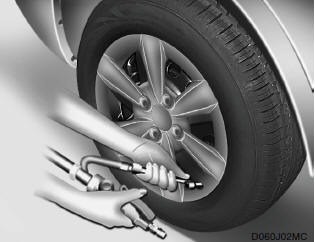
If you have a tire gauge, remove the valve cap and check the air pressure. If the pressure is lower than recommended, drive slowly to the nearest service station and inflate to the correct pressure. If it is too high, adjust it until it is correct. Always reinstall the valve cap after checking or adjusting tire pressure. If the cap is not replaced, air may leak from the tire. If you lose a valve cap, buy another and install it as soon as possible.
After you have changed wheels, always secure the flat tire in its place in the trunk and return the jack and tools to their proper storage locations.
See also:
2011 ELANTRA PRICING
The all-new Hyundai Elantra offers modern design, loads of comfort and
convenience features, and is an outstanding weapon against gas prices all with a
low starting price of $14,830. ...
Windshield defrosting and defogging
WARNING - Windshield heating
Do not use the or
position during cooling operation in
extremely humid weather. The difference between the temperature of the outside air
and that of the windshiel ...
To Check the Fluid Level
The fluid level in the brake fluid reservoir should be checked periodically.
The level should be between the "MIN" and "MAX" marks on the side of the reservoir.
If the level ...