


Driving at night
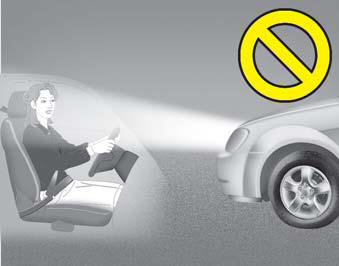
Because night driving presents more hazards than driving in the daylight, here are some important tips to remember:
• Slow down and keep more distance between you and other vehicles, as it may be more difficult to see at night, especially in areas where there may not be any street lights.
• Adjust your mirrors to reduce the glare from other driver's headlights.
• Keep your headlights clean and properly aimed on vehicles not equipped with the automatic headlight aiming feature. Dirty or improperly aimed headlights will make it much more difficult to see at night.
• Avoid staring directly at the headlights of oncoming vehicles. You could be temporarily blinded, and it will take several seconds for your eyes to readjust to the darkness.
See also:
SEAT BELTS-Front Passenger and Rear Seat 3-Point System with Combination Locking
Retractor : To Fasten Your Belt
Combination retractor type seat belts are installed in the rear seat outboard
and center positions to help accommodate the installation of child restraint systems.
Hyundai strongly recommends that ...
Starting the engine
WARNING
Always wear appropriate shoes when operating your vehicle. Unsuitable shoes
(high heels, ski boots,etc.) may interfere with your ability to use the brake, accelerator
pedal, and clutch (i ...
Checking drive belts
Drive belts should be checked periodically for
proper tension and adjusted if necessary. At the
same time, belts should be examined for cracks,
wear, fraying or other evidence of deterioration
a ...