


Key positions
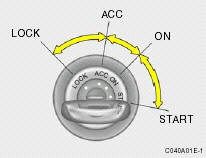
Key positions
CAUTION:
The engine should not be turned off or the
key removed from the ignition key cylinder
while the car is in motion. The steering
wheel is locked by removing the key.
o "START"
The engine is started in this position. It will crank until you release the key.
NOTE:
Do not hold the key in the "START" position
for more than 15 seconds.
o "ON"
When the key is in the "ON" position, the ignition is on and all accessories may be turned on. If the engine is not running, the key should not be left in the "ON" position. This will discharge the battery and may also damage the ignition system.
o "ACC"
With the key in the "ACC" position, some electrical accessories (radio, etc.) may be operated.
o "LOCK"
The key can be removed or inserted in this position.
To protect against theft, the steering wheel locks by removing the key.
NOTE:
If difficulty is experienced in turning the
ignition key to the START position, turn the
steering wheel right and left to release the
tension and then turn the key.
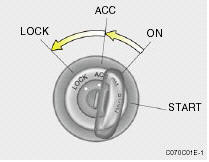
To remove the ignition key
1. Turn the ignition key to the "ACC" position.
2. Simultaneously push and turn the ignition key counterclockwise from the "ACC" position to the "LOCK" position.
3. The key can be removed in the "LOCK" position.
See also:
A Few Tips
o Whenever you have your Hyundai serviced, keep copies of the service records
in your glove box. This will help ensure that you can document that the required
procedures have been performed to kee ...
Engine Number
The engine number is stamped on the engine block as shown in the drawing. ...
Truckish performance
Interior noise aside, the Santa Fe performed well on the road.
The ride is feels more truckish than carlike. The bumps are hard, and on the
highway, I never felt confident in this vehicle. The pow ...