


Tire rotation
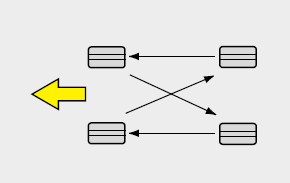
To equalize tread wear, it is recommended that the tires be rotated every 7,500 miles (12,000 km) or sooner if irregular wear develops.
During rotation, check the tires for correct balance.
When rotating tires, check for uneven wear and damage. Abnormal wear is usually caused by incorrect tire pressure, improper wheel alignment, outof- balance wheels, severe braking or severe cornering. Look for bumps or bulges in the tread or side of tire. Replace the tire if you find either of these conditions. Replace the tire if fabric or cord is visible. After rotation, be sure to bring the front and rear tire pressures to specification and check lug nut tightness.
Disc brake pads should be inspected for wear whenever tires are rotated.
NOTICE
Rotate radial tires that have an asymmetric tread pattern only from front to rear and not from right to left.
WARNING
• Do not use the compact spare tire for tire rotation.
• Do not mix bias ply and radial ply tires under any circumstances. This may cause unusual handling characteristics that could result in death, severe injury, or property damage.
See also:
TPMS (Tire Pressure Monitoring System) Malfunction Indicator (If Installed)
TPMS malfunction indicator comes on for 3 seconds after the ignition key is turned
to the "ON" position. If the warning light does not come on, or continuously remains
on after comming ...
Recommended cold tire inflation pressures
All tire pressures (including the spare) should be checked when the tires are
cold. “Cold Tires” means the vehicle has not been driven for at least three hours
or driven less than one mile (1.6 km ...
Vehicle certification label
The vehicle certification label attached on the driver’s side center pillar contains
the vehicle identification number (VIN). ...