


Checking the engine oil level
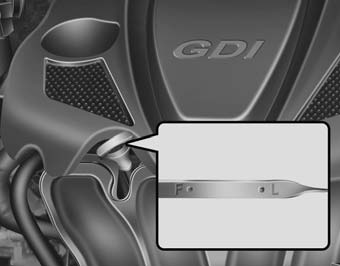
1. Be sure the vehicle is on level ground.
2. Start the engine and allow it to reach normal operating temperature.
3. Turn the engine off and wait for a few minutes (about 5 minutes) for the oil to return to the oil pan.
4. Pull the dipstick out, wipe it clean, and re-insert it fully.
5. Pull the dipstick out again and check the level. The level should be between F and L.
CAUTION
Do not overfill with engine oil. Engine damage may result.
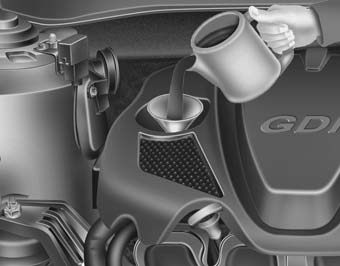
If it is near or at L, add enough oil to bring the level to F. Do not overfill.
Use a funnel to help prevent oil from being spilled on engine components.
Use only the specified engine oil. (Refer to “Recommended lubricants and capacities” in section 8.)
See also:
Emergency starting
Connect cables in numerical order and disconnect in reverse order. ...
Day/night inside rearview mirror
Manual Type
Your Hyundai is equipped with a day/night inside
rearview mirror. The "night" position is selected
by flipping the tab at the bottom of the mirror
toward you. In the " ...
FUN-TO-DRIVE
The 2010 Hyundai Tucson's athletic shape is now complemented with more agile
handling, responsive steering and improved body roll control. These enhancements
make the new Tucson more fun-to-drive. ...