


Insrtument cluster
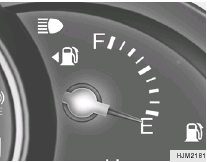
FUEL GAUGE
The needle on the gauge indicates the approximate fuel level in the fuel tank. The fuel capacity is given in Section 9.
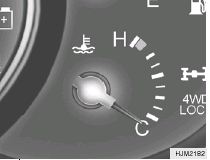
ENGINE COOLANT TEMPERATURE GAUGE
WARNING:
Never remove the radiator cap when the
engine is hot. The engine coolant is under
pressure and could erupt and cause severe
burns. Wait until the engine is cool before
adding coolant to the reservoir.
The needle on the engine coolant temperature gauge should stay in the normal range. If it moves across the dial to "H" (HOT), pull over and stop as soon as possible and turn off the engine. Then open the hood and, after the engine has cooled, check the coolant level and the water pump drive belt. If you suspect cooling system trouble, have your cooling system checked by a Hyundai dealer as soon as possible.
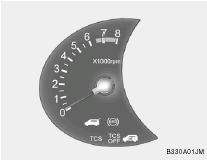
TACHOMETER
The tachometer registers the speed of your engine in revolutions per minute (rpm).
CAUTION:
The engine should not be raced to such a
speed that the needle enters the red zone
on the tachometer face. This can cause
severe engine damage and may void your
warranty.
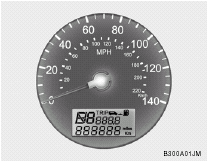
SPEEDOMETER
Your Hyundai's speedometer is calibrated in miles per hour (on the outer scale) and kilometers per hour (on the inner scale).
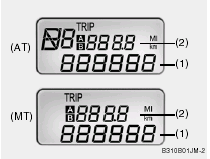
ODOMETER/TRIP ODOMETER
Odometer (1)
The odometer records the total driving distance in kilometers or miles, and is useful for keeping a record for maintenance intervals.
NOTE:
Any alteration of the odometer may void
your warranty coverage.
Trip odometer (2)
o This mode indicates the drive distance travelled since the last drive time reset.
o You can choose the TRIP A or TRIP B by pressing the trip odometer switch for less than 1 second.
See also:
TRUNK LID/TAIL GATE
WARNING:
The trunk lid or the tail gate should always be kept completely closed while
the vehicle is in motion. If it is left open or ajar, poisonous exhaust gases may
enter the car resulting in ...
Safety
The Accent comes with a number of standard safety features we haven't seen in
this class. Chief among them is standard stability control, which is required by
law on all 2012 models but isn't pres ...